Your T Lens doesn't make you smart.
 Take the TestAdministration
TDF
How TDF Works
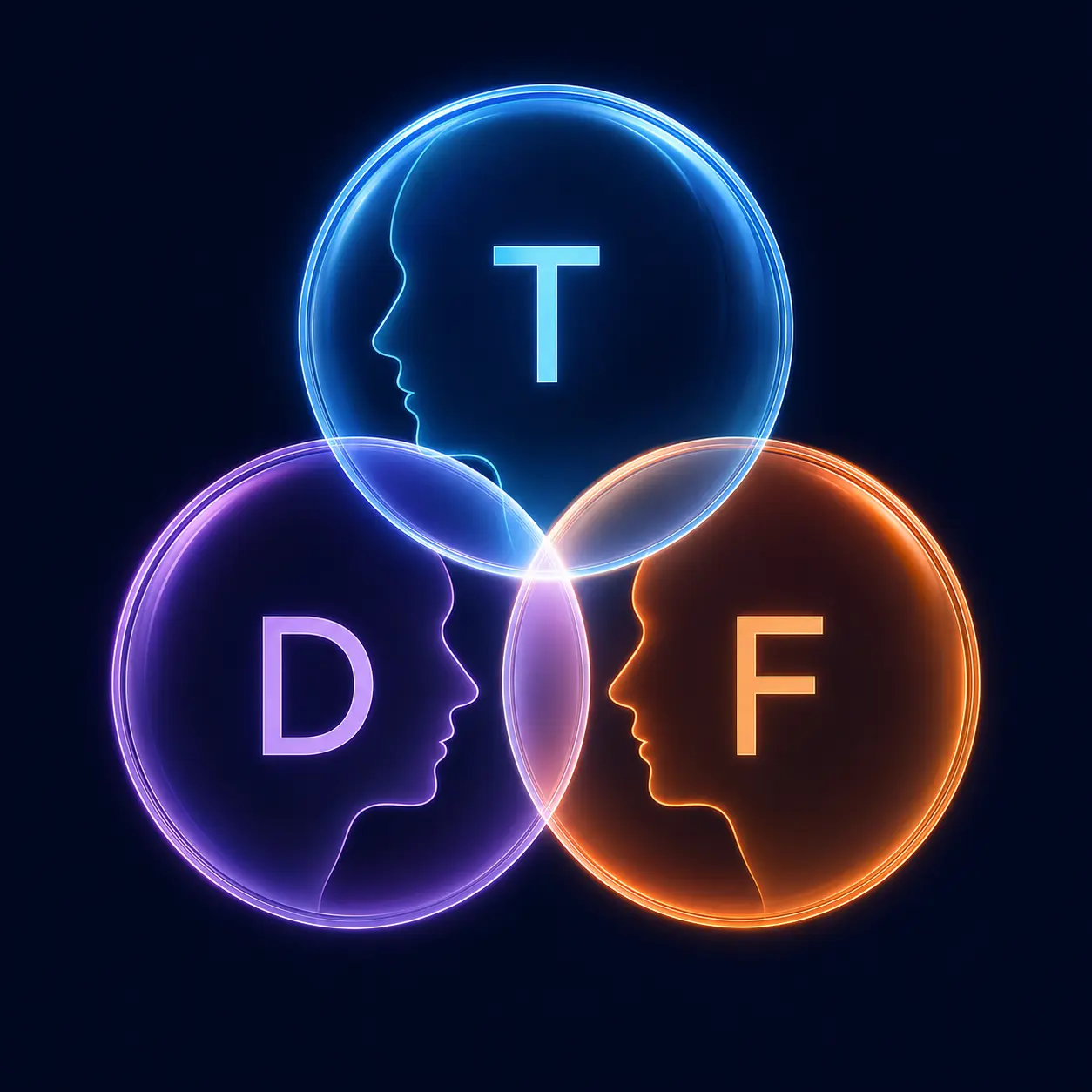
TDF is a personality framework that explores what people notice. Its three perceptual lenses focus on facts, choices, and connections. Everyone uses all three, in one of six patterns.
Our styles...
We see things differently.
In the wonderfully messy complexity of humans, we will focus on one specific way in which we differ: we see things differently. As we look at our worlds, as we look at our tasks, as we look at our relationships, some of us focus more on the facts, the objective realities; others focus more on the choices and opportunities before them; and still others focus more on the connections and relationships among all these facts and opportunities.
The TDF Pattern Inventory is the assessment used to explore your pattern. Learning the pattern gives you a shared language for talking about how you approach work, relationships, and everyday decisions.
Facts. Choices. Connections. That's it.
Of course, we all see facts, choices, and connections. The difference is in which we see best, which is most salient, which captures our attention. The image we use is of three lenses, which we call (surprise!) T, D, and F. In our early days, we used the words Think, Decide, and Feel, but we came to realize that those words are misleading.
So now we just use the letters.
Your D Lens doesn't make you decisive.
It focuses on choices.
Your F Lens doesn't make you warm and caring.
It focuses on connections.
The pattern is what matters.
Big and Small Lens Difference
We call the lens you use most comfortably and most naturally your big lens. This lens strongly colors your sense of the world. The lens you are least comfortable with we call your small lens. Using this lens takes more effort, so it least shapes your sense of the world.
Big lens
The lens you use most comfortably and most naturally
Small lens
The lens you are least comfortable with
The Order Also Matters
The order you use these lenses also strongly shapes your perceptions, so the order combined with your big lens and the small lens make you one of 6 possible patterns.

Three lensesSix patterns
TDf
TFd
DTf
DFt
FDt
FTd
The six TDF Patterns
The six different personal styles that explain so much about you and the people around you.
Compare the six TDF patternsTDf
Facts → choices → connections
“For me – Life is logical: plan, then act”
It’s simple. I start with the facts. I make a plan. Then I move forward. Remember: it’s never personal.
- I see an objective world of facts and logic
- I learn by standing back, observing, and analyzing
- I work steadily, step-by-step, following my plan
- I bring stability and calm to my teams
I value order and rationality
When I act as if this is an assembly line, remind me to use F.
TFd
Facts → connections → choices
“For me – Life is complex: think about it”
Like TDf, I start with the data, but then I’m on to “F” – considering all the implications and more of the data.
- I see an intricate world in which each fact is a piece of a puzzle, fitting together into a solution
- I learn by absorbing as much data and implications as possible before coming to conclusions.
- But when I reach a conclusion, no one is more committed
- I’m patient and precise
I value thoughtfulness and patience
When I’m missing the bus because I’m studying the schedule, push me
DTf
Choices → facts → connections
“For me – Life is a battle: win it”
I focus on my goals, then I move to the data to support them. I am so structured and focused, that I don’t see the complexities.
- I see a world filled with challenges and obstacles I must overcome to accomplish my goal.
- I learn by acting upon my goals and then analyzing the consequences
- I am straightforward and direct. I say what I think often without noticing the unintended consequences
- Don’t be subtle with me. I won’t get it
I seek challenge and competition
When I’m rolling over people, remind me to use F
DFt
Choices → connections → facts
“For me – Life is an adventure: live it fast”
I see endless opportunities. We should go for it! My little t brings great energy and ideas. Hey, someone should write this down!
- I’m strategic. I have a vision – a goal – that drives me on my journeys
- I see a world filled with opportunities and possibilities. This inspires the group to follow
- I don’t mind mistakes – that’s how I learn
- I’m prepared to improvise. I expect things to change and plans to fall short
I seek adventure and action
If I start to dive into an empty swimming pool, remind me to do T
FDt
Connections → choices → facts
“For me – Life is too complex for one short tagline”
I start with the context. What’s the story? I’m involved in many things simultaneously. Oh, I’ve got an idea!
- I see kaleidoscopic, ever-changing patterns of connection
- I learn by participating and getting involved
- I tell stories – because stories let me express the complexity and flow of what I am experiencing
- I am flexible, reacting spontaneously to life’s ever-moving flow
Life is full of drama and complexity, and I like to be at the center of it
When I start bouncing off the walls, remind me to do T
FTd
Connections → facts → choices
“For me – Life is unfolding: act with care”
I start with the big picture. Then I move to the information. Like TFd, everything and everyone must be considered before I declare.
- I see a world of subtle linkages and connections that need to be brought into harmony to thrive
- I learn by listening – I am the best listener of all the patterns. I connect one-to-one, quietly and subtly.
- I create relationships, teams, and communities that last. I am the glue between people, tasks, and organizations.
- I’m building for the long term – We can make it happen together
I value cooperation, communication, and harmony
When I’m letting things drift, remind me to use D
So simple yet surprisingly rich.
While TDF simplifies the way we look at the complexities of people, it doesn’t discount our shared humanity or our unique individuality.
But TDF does provide a map through the complex territory of our lives and interpersonal interactions, allowing us to make more intelligent and effective decisions and actions when working with others.
TDF is best because...
Why use TDF instead of other personality tests?
Real Impact.Real World Usability.A simple, yet most impactful, personality test.
Nothing is easier to understand.
TDF is easy to test, fun to learn, simple to understand, remember and apply. And it still has all the richness of the most complex models. Although simple, TDF does a great job accurately highlighting the characteristics of each individual.
It’s too simple and sticky to ever forget.
The biggest difference with TDF is how sticky and memorable it is. TDF users remember their personal pattern and the patterns of others forever. People agree with the descriptions of their pattern, and others see them in a similar way. Other tools are much more difficult remember and recall.
You will actually use it!
Other high complexity patterning tools may satisfy our ego, but in the real world they don’t get fully understood, remembered, used or applied. You will start applying TDF in relationships right away, often, and long into the future.
Questions about TDF
Before you take the TDF test
What do T, D, and F stand for?
T focuses on facts, D on choices, and F on connections. Early TDF materials used Think, Decide, and Feel, but the model now uses the letters to name perceptual lenses. They describe what draws your attention, rather than how intelligent, decisive, or caring you are.
Why are there six TDF patterns?
Three lenses can be arranged in six orders: TDf, TFd, DTf, DFt, FDt, and FTd. Your pattern reflects both that order and the relative prominence of the lenses. A pattern describes how the three work together, so a single letter tells only part of the story.
What does the lowercase letter mean?
The lowercase letter marks the small lens, the one you use less comfortably or naturally. In TDf, for example, F is the small lens. That person can still notice connections and relationships, but bringing them into focus may take more deliberate attention.
Does my pattern describe my whole personality?
No. TDF focuses on patterns of perception. Your skills, values, experience, and circumstances also shape who you are. Use your pattern to ask better questions about yourself and other people. Leave room for someone to surprise you, including yourself.
How can I use TDF in a conversation?
Ask: What facts do we need? What choices are available? What connections or consequences should we consider? You can use these questions without knowing anyone's pattern. Our guide to communication styles at work walks through an example and a team exercise you can try.
How long does the TDF assessment take?
The TDF Pattern Inventory contains 120 statements. Set aside approximately 20 minutes of uninterrupted time to answer thoughtfully at your own pace. You need a valid Test Code to begin on the assessment page.
Is the TDF personality test free?
The assessment requires a Test Code. A facilitator or organization may provide one, or you can purchase a Test Code. The purchase page has the current pricing and terms.
Comparing options? Read our comparison of TDF, DISC, and MBTI. For more ways to put the model into practice, browse the TDF resources.
Our Products
Curious to learn more?
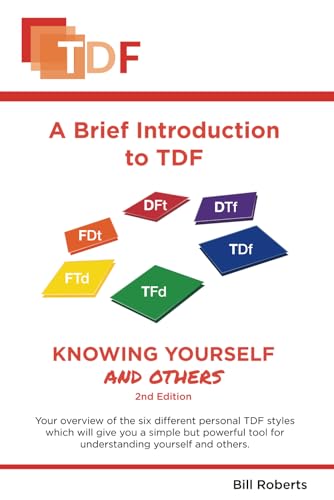
$3.99 · Kindle Edition
Book - A Brief Introduction to TDF
This book gives you a quick overview of the six TDF Patterns - the six different personal styles that explain so much about you and the people around you (Kindle Edition)
Buy Now →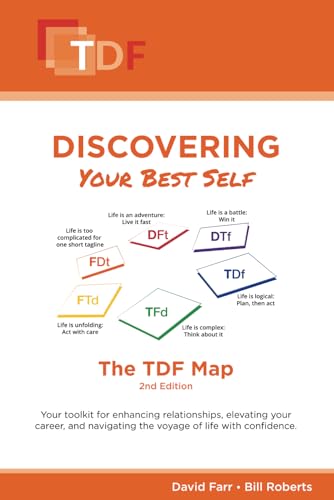
$6.99 · Kindle Edition
Book - Discovering Your Best Self
This book will give you the definitive portraits of each of the TDF personality styles and their applications to your relationships, your work, and your life journey (Kindle Edition)
Buy Now →Curious to learn more?